Buying a BMW E39 M5
The E39 M5 is widely regarded as the finest M5 BMW ever built. Here is how to find a good one - VANOS, timing chains, Individual specification and the specialists who can help.
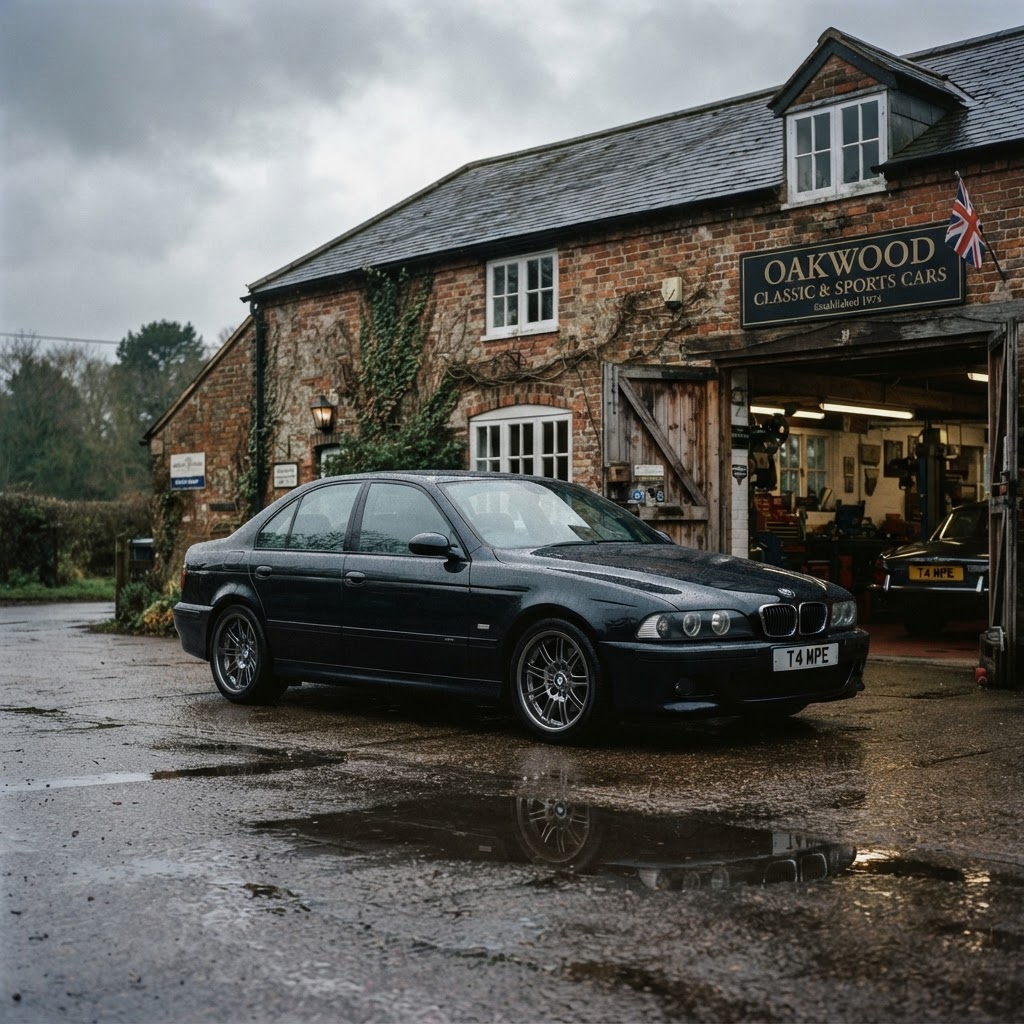
A definitive buyer's guide to the E39 M5 - the last of the hydraulic-steering, naturally aspirated V8 M5s.
A brief history
BMW unveiled the E39 M5 in 1998, replacing the lauded straight-six E34 M5 and, for the first time, fitting an M5 with a V8. Under the bonnet sat the bespoke S62 5.0-litre naturally aspirated V8, producing 400 hp and 500 Nm of torque, driving the rear wheels through a six-speed manual gearbox. There was, notably, no automatic option offered anywhere in the world. Production ran from 1998 to 2003, with a minor facelift in 2000 that brought revised headlights ("angel eyes"), a wider kidney grille, clear indicators and minor interior updates. It was replaced by the far more complex E60 M5 and its V10. Today the E39 M5 is widely regarded as the finest M5 BMW has ever built - and, for many, the best performance saloon of its era, full stop.
Why the E39 M5 is so good
The E39 M5 is the "gentleman express" - a hand-built, naturally aspirated V8 saloon that is as comfortable doing the school run as it is crossing a continent at pace. The S62 is a glorious engine, with individual throttle bodies for each cylinder, double VANOS on both inlet and exhaust, and a soundtrack that builds from a subdued V8 burble to a genuinely angry howl. The steering is hydraulic and full of feel, the chassis is remarkably composed for a 1,795 kg saloon, and the styling is perfectly judged - aggressive but understated, indistinguishable from a 530i to the untrained eye. It is also the last M5 with hydraulic power steering, the last without a rev limiter you can hear from a mile off, and the last that can be maintained by a knowledgeable owner. For many enthusiasts it represents the peak of the M division.
Engines and gearboxes
Manual vs automatic - a short answer
There is no factory automatic E39 M5. Every car ever built left the factory with the same six-speed manual gearbox, which is robust and a genuine pleasure to use. So the manual-vs-auto question does not really apply here - all E39 M5s are manual, and that is a large part of their appeal. (If you have seen an automatic E39 M5, it will have been a non-M 5 Series - commonly the 530i or 540i - or, very rarely, a post-factory conversion, which is unusual and would dent a car's value.) The gearbox itself is largely trouble-free; the clutch is the wear item, and a high-mileage car on its original clutch may be approaching replacement. A firm, high bite point with no slip is what you want.
Special editions
There were no official factory "special editions" of the E39 M5 - BMW did not build a CSL, a GTS or a limited run-out model. What you are looking for instead is highly-specified cars via the BMW Individual programme. The most desirable Individual colours - Le Mans Blue, Carbon Black (a stunning deep metallic that reads black in shade and blue in sun), Oxford Green, Royal Red - command clear premiums, as do cars specified with the full Merino leather, extended leather, Alcantara headlining, the individual audio and the Style 32 "M Parallel" alloy wheels. A well-specified Individual car in a rare colour is the most collectable E39 M5 of all, beyond even a low-mileage standard car.
Specification and popular options
The most sought-after options include the M Parallel (Style 32) alloy wheels, electric comfort seats with memory, heated and ventilated seats, the widescreen sat-nav, park distance control front and rear, the M audio system, Alcantara headlining, electric rear blind, auto-dimming mirror and the extended leather package. Split-folding rear seats and the sunroof are less common but useful. As above, the Individual specification is the real prize - it is worth checking the build sheet (available from BMW via the VIN) to verify exactly what a car left the factory with.
Common issues and what to look for
VANOS units
The S62 has two VANOS units (one per bank) and they are a known wear item. A rattle from the top of the engine at idle, a loss of low-down torque, or a check engine light relating to VANOS timing all point to work being due. Rebuild kits (notably the Beisan Systems kits) exist; ask for evidence of VANOS rebuild, and budget for it if there is none. Cars that have already had the work done with the upgraded seals and rattle kit are a more reassuring buy.
Timing chain guides
The plastic timing chain guides are a documented weakness and can fail, allowing the chain to rattle and, in the worst case, jump. A rattle from the front of the engine on cold start that fades as it warms is the classic symptom. Timing chain guide and chain replacement is a significant, expensive job - budget accordingly on a car with no record of it, and listen carefully.
Rod bearings
As with the S54 in the E46 M3, the S62's big-end bearings are a wear item. Many owners replace them preemptively at higher mileages. Evidence of bearing replacement, or a budget to do so, is sensible on a higher-mileage car.
MAF sensors and throttle actuators
The two mass airflow sensors are sensitive and expensive; a failing MAF will cause rough running and a loss of power (and a test is straightforward). The eight individual throttle actuators can also fail, causing the engine to drop onto a reduced-power "limp" mode. Both are diagnosable; both are not cheap. Look for smooth, even running across the rev range and no fault lights.
Cooling system
As ever with an M car, the cooling system is consumable: radiator, water pump, expansion tank, thermostat and hoses. The viscous fan coupling can fail too. A recent, documented cooling refresh is a good sign; an untouched system on a high-mileage car is a future bill.
Bushings, shocks and clutch
The front suspension thrust arm bushes are a common wear item and cause a shimmy through the steering at speed. The dampers (often the EDC electronic dampers, which are expensive to replace) and the clutch on high-mileage cars are all worth assessing.
Pixels, electrics and interior
The instrument cluster pixel display is a known failure (a common, fixable repair), as are the window regulators, the door lock actuators and the light module. An interior that matches its mileage, with working electrics and a clean headlining, is a strong sign of a cared-for car.
UK market pricing
As of 2026, UK E39 M5 values are firm and rising for the best cars. Indicative ranges:
- Project or high-mileage driver, 150k+ miles: £18,000-£25,000
- Solid, usable manual, 90-140k miles, good history: £28,000-£40,000
- Excellent manual, full history, major work done: £42,000-£55,000
- Low-mileage, exceptional, Individual-spec cars: £55,000-£75,000+
- The very best sub-50k-mile cars in rare colours: £75,000+
Because every car is a manual, there is no manual-vs-auto price split to consider. Instead, the premiums are driven by specification (Individual colour and leather), mileage, history and the condition of the major mechanicals - VANOS, timing chain guides, bearings.
Inspection checklist
- Engine: quiet cold start, no chain rattle, smooth idle, even pull, no smoke
- VANOS: no rattle, no fault lights, evidence of rebuild
- Timing chain guides: replaced on schedule, or budget for them
- Rod bearings: replaced or budgeted for
- MAFs and throttle actuators: clean running, no limp mode, no fault lights
- Cooling system: recent refresh, steady temperature
- Suspension: no steering shimmy, dampers working, bushes good
- Clutch: firm, high bite, no slip
- Bodywork: clean sills, arches, no accident damage, original panels
- Electrics: working pixels, windows, locks, no warning lights
- History: full, with documented major work
- Build sheet verified via VIN
How to buy a good one
The E39 M5 is a car that hides its bills well - a tired example can look immaculate on a forecourt and still need tens of thousands of pounds of engine work. Buy on history and provenance, not on shine. The best thing you can do before committing is commission a specialist pre-purchase inspection from a firm that knows the S62 engine. Munich Legends, the respected West Sussex BMW M specialist, is an obvious choice and will know exactly what to look for - VANOS, timing chains, bearings, throttle bodies and the rest. Other knowledgeable independents, including Jaymic in Norfolk, can carry out a thorough PPI and, just as importantly, advise on what a car is likely to need next. Verify the build sheet from the VIN so you know exactly what specification you are buying, insist on full documented history, and walk away from anything with a rattling chain or a thin service file. Buy the very best you can stretch to: with the E39 M5, the difference between a cheap one and a good one is almost entirely measured in deferred, very expensive maintenance - and the good ones are only going one way.