Buying a BMW E46 M3 - Peak M3?
Everything you need to know before buying an E46 M3 - from subframe cracks and the CSL premium to manual vs SMG, with current market pricing and the specialists who know these cars best...
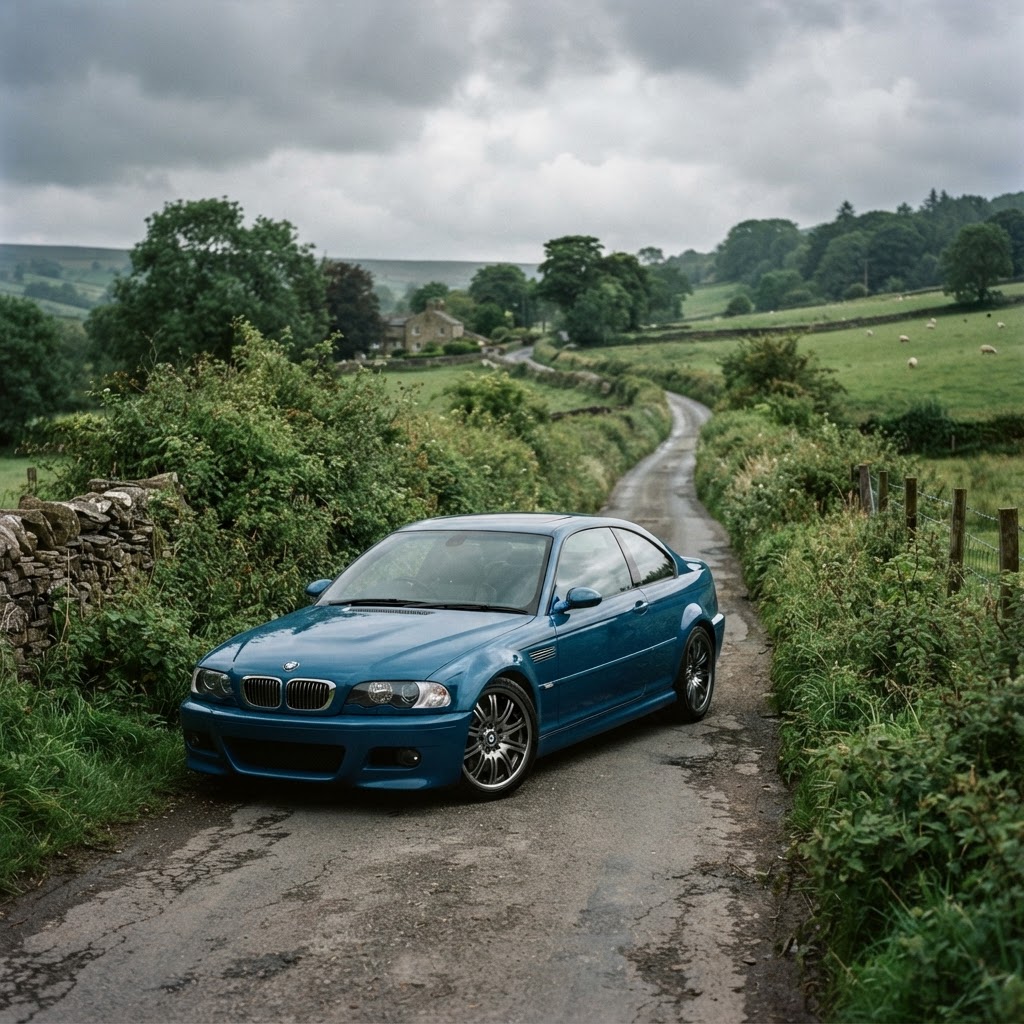
A definitive buyer's guide to the E46 M3 - from CSL premiums to subframe cracks, with current UK market pricing and the specialists who truly know these cars.
A brief history
BMW launched the E46 M3 in 2000, succeeding the E36 and marking a return to the naturally aspirated straight-six that had made the original E30 M3 famous. Under the bonnet sat the all-new S54 3.2-litre inline-six, producing 343 hp and 365 Nm of torque - enough for a 0-60 mph sprint of around 5.1 seconds and an electronically limited 155 mph top speed. It was offered as a coupe from launch and as a convertible from 2001, with a choice of a conventional six-speed manual or BMW's then-revolutionary Sequential Manual Gearbox, SMG II. A facelift in 2003 brought revised lights, new wheels and minor interior tweaks, and production ran until 2006. The same year brought the halo model, the CSL. Today the E46 M3 is regarded as one of the great driver's cars of its era - the last M3 with a free-revving naturally aspirated straight-six and hydraulic power steering.
Why the E46 M3 is so good
The appeal is purity. The S54 is one of BMW's most celebrated engines, revving to an 8,000 rpm redline with a metallic wail that no modern turbocharged M car can match. The steering is hydraulic and talkative, the chassis is beautifully balanced, and the design - power dome on the bonnet, broad arches, quad tailpipes - has aged into a genuine modern classic. It is also the last M3 that feels genuinely analog: no adaptive dampers on standard cars, no turbo lag, no synthesised engine sound. On a good B-road it is one of the most rewarding cars of its generation at any price.
Engines and gearboxes
The S54 is robust but it is not maintenance-free, and its service history dictates everything about a used example. Look for evidence of regular oil changes (BMW's early long-life intervals were too long - 15,000 miles is the sensible maximum, ideally 10,000), and be wary of cars with patchy or missing history.
Manual vs SMG
Six-speed manual cars are the more desirable and now command a clear premium. The Getrag manual is reliable and rewarding, and values for good manuals are climbing fastest. SMG II is an automated manual, not a true automatic - it uses a conventional clutch operated by computer-controlled hydraulics. It offers launch control and lightning-quick shifts at speed but is jerky at low speeds and around town, and it is expensive to keep on top of. The weak points are the hydraulic pump, the relay, the accumulator (pressure reservoir) and the clutch itself. A failing pump or accumulator will leave the car stuck in gear or unable to select one. Budget for pump and accumulator replacement if there is no record of it, and treat any SMG car with an intermittent gear selection warning very seriously. SMG cars are cheaper to buy as a result - often £3,000-£5,000 less than an equivalent manual - and an SMG car converted to manual (a well-documented, fairly straightforward swap) can be a smart buy, though it will never carry the same premium as a factory original.
Coupe vs convertible
The coupe is the purist's choice: lighter, stiffer, and with a cleaner driving position. The convertible is heavier and noticeably less rigid, with a fabric roof that eats into rear headroom, but it is still a genuine M3 and is far more usable as a year-round, all-weather car. Convertibles are generally cheaper than coupes - typically £3,000-£6,000 less for a like-for-like car - though the gap narrows at the top of the market for low-mileage examples. For driving purity, buy a coupe; for open-air usability, the convertible is a fine thing and increasingly collectable in its own right.
The CSL
In 2003 BMW built the M3 CSL (Coupe Sport Lightweight), stripping weight to around 1,385 kg through a carbon-fibre roof and airbox, lighter glass, no radio, no air-conditioning (optionally re-fitted by owners), thinner rear glass and a stripped, lightweight interior. Power rose to 360 hp and the suspension was comprehensively reworked with bespoke springs, dampers and camber settings. Just ~1,383 were built, of which around 423 were right-hand-drive UK cars, and all were SMG-only. The CSL is now the most valuable E46 of all - genuinely good, original examples start around £70,000 and the very best low-mileage cars are pushing well into six figures. Buy one on provenance and originality: the carbon roof, the original lightweight seats and the factory specification matter enormously to value. A CSL that has been heavily modified or has lost its original lightweight components is worth considerably less.
Specification and popular options
The most sought-after options are the 19-inch forged alloy wheels (much lighter and more desirable than the 18s), Harmon Kardon audio, the widescreen sat-nav, heated seats, electric folding mirrors, cruise control and front and rear parking sensors. The ZCP Competition Package (available from 2005) added the 19-inch forged wheels, a slightly sharper steering rack, a more aggressive DSC mode and unique Alcantara interior trim, and is a genuine collector's tick-box.
Colour matters too. The individual colours - Laguna Seca Blue, Imola Red, Phoenix Yellow - divide opinion but are now the most valuable, alongside the understated classics like Carbon Black, Le Mans Blue and Oxford Green. Full black or grey leather is the most common interior; extended leather in the individual colours, Alcantara headlinings and carbon trim all add appeal.
Common issues and what to look for
Rear subframe - the big one
The single most important check on any E46 M3 is the rear subframe mounting points. The forces through the rear axle can crack the subframe itself and, more seriously, tear the mounting points out of the chassis floor. A subframe failure can write off an otherwise good car. Get underneath and inspect the four mounting points for hairline cracks, bubbling or evidence of repair. Any car that has not had the reinforcement plates fitted is a candidate for the work to be done preventatively; any car that has already been properly reinforced (with the welded-in reinforcement kit) is a more reassuring buy. This is the first thing any specialist will check.
VANOS
The S54's double VANOS unit is a known weak point. The high-pressure VANOS unit can fail, and the retaining tabs on the VANOS hub can snap, leading to a rattle and a loss of performance. A quiet, smooth idle with strong, even pull through the rev range is what you want; a rattle from the top of the engine on start-up or a flat spot around 3,000 rpm suggests VANOS work is due. Ask for evidence of VANOS rebuild or the upgraded Beisan Systems rebuild.
Rod bearings
The S54's big-end (rod) bearings are a documented wear item. BMW themselves issued guidance recommending inspection at higher mileages, and many owners have the bearings replaced preemptively at around 80,000-100,000 miles. A car with documented bearing replacement is a more comfortable buy; a higher-mileage car with no record should be budgeted for.
Cooling
The cooling system is consumable. The radiator, water pump (the earlier plastic-impeller pumps fail - the later composite/steel impeller is the upgrade), expansion tank, thermostat and hoses all have finite lives. Budget to refresh the cooling system if there is no record of it being done recently, and watch the temperature gauge like a hawk on any test drive.
SMG
See the gearbox section above. On any SMG car, check the pump primes quietly, gears select cleanly and promptly (both engine running and off), there are no "cog" warnings, and the clutch bite and self-adjusting mechanism behave. A clutch that has had the adaptation reset and still drags or slips is a warning sign.
Bodywork and rust
The E46 is better than the E36 for rust but it is not immune. Check the rear wheel arches (the lip where the arch meets the bumper), the sills, the front wings, the boot floor and the front subframe mounting points. Bubbling under the paint is the first sign; accident damage and poor repairs are more serious. A clean, original, never-welded shell is worth a premium.
Interior and electrics
Check the pixel display on the instrument cluster (a common failure), the window regulators, the sunroof if fitted, and the seats - the bolster on the driver's seat wears through easily and retrim is not cheap. An interior that matches its mileage is a strong sign of a cared-for car; a tatty interior on a "low mileage" car is a red flag.
UK market pricing
As of 2026, UK E46 M3 prices have stabilised after the post-2020 surge, but genuinely good cars are still firmly priced. Indicative ranges:
- Project or rough driver: £16,000-£22,000
- Solid, presentable manual coupe, 80-120k miles: £25,000-£32,000
- Excellent manual coupe, full history, subframe done: £35,000-£45,000
- Low-mileage, exceptional manuals: £45,000-£60,000+
- Convertibles: typically £3,000-£6,000 less than the equivalent coupe
- SMG cars: typically £3,000-£5,000 less than the equivalent manual
- CSL: £70,000-£110,000+ for the best examples
Manual, subframe-reinforced, full-history cars in desirable individual colours are the strongest performers; tired high-mileage SMG cars are the softest.
Inspection checklist
- Subframe mounting points: no cracks, no repairs, or properly reinforced
- VANOS: quiet on start-up, smooth idle, even pull, evidence of rebuild
- Rod bearings: replaced on schedule, or budget for them
- Cooling system: recent refresh, no leaks, steady temperature
- Gearbox and clutch: clean shifts, no slip, no warnings (especially SMG)
- Bodywork: clean sills, arches, boot floor, no accident damage
- Interior: wear consistent with mileage, working pixels and electrics
- History: full, with regular oil changes and documented major work
- HPI clear, no finance, no write-off, matching VINs
How to buy a good one
The E46 M3 rewards the patient buyer. Set your budget, decide whether manual purity or SMG budget matters to you, and buy on history and condition above all. The single best investment you can make is a specialist pre-purchase inspection. In the UK, firms such as Munich Legends in West Sussex have an exceptional reputation for BMW M cars and will know exactly where to look - subframe, VANOS, bearings, the lot. Other respected independents include Jaymic in Norfolk, and a growing number of M-specialist independents who can carry out a proper PPI. A few hundred pounds spent on an independent inspection before you commit will tell you whether the car in front of you is a future classic worth keeping - or an expensive project dressed up as a good one. Insist on seeing the car in person, walk away from anything with a thin or absent history, and let the specialist's report do the talking. Buy the best you can afford; with the E46 M3, condition is everything and the gap between a good one and a cheap one is measured in thousands of pounds of deferred maintenance.